Wednesday, February 23, 2011

Piney Island

Click on an image to see a larger version, then use your Back button to return to this story.  Enjoy!


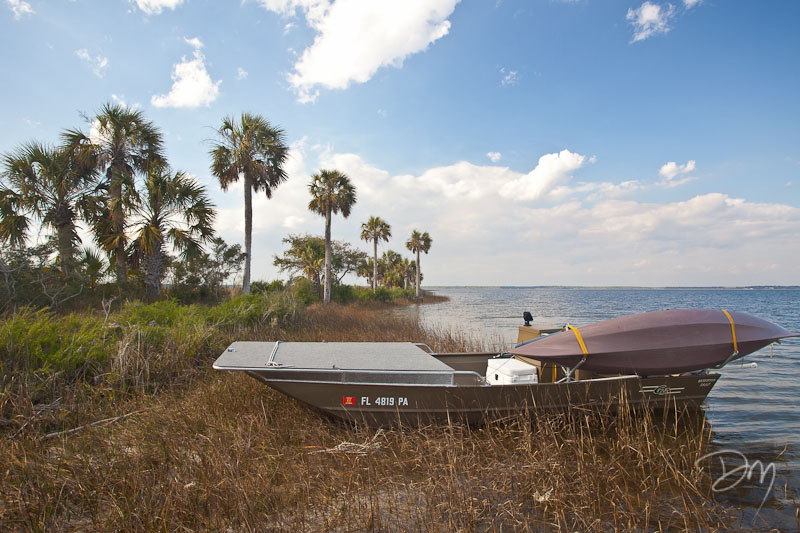
Palmy Island would be a more appropriate name.  Maybe there were pines there once, but now the island is mostly saltmarsh with a few areas high enough to support trees.  The largest of these spots does have a small piney forest... otherwise,  it's marsh with spits of sand covered in grass and lined with cabbage palms and a few cedars. 

 Bob Thompson and I ventured out as the tide was rising to circumnavigate Piney Island, land and explore it where we could... to see what the island had to offer..  Bob had heard that there is a plaque at a point called Seven Palms which describes the acquisition of this 1000+ acre island by St. Marks National Wildlife Refuge.  The photo above was made at Seven Palms.


"A minefield" is how I would describe the oyster bars around the island.  The bars are numerous, come up randomly and suddenly from deep water, and are super shallow, even at full high tide.  With Bob's eagle-eye watching from the bow and going at idle speed, we avoided many groundings, but still hit three oyster bars - CRUNCH!

Along the way, we detoured to a long line of trees along the mainland near the mouth of Purify Creek.  We didn't have time to stop, but above is a shot from the boat.

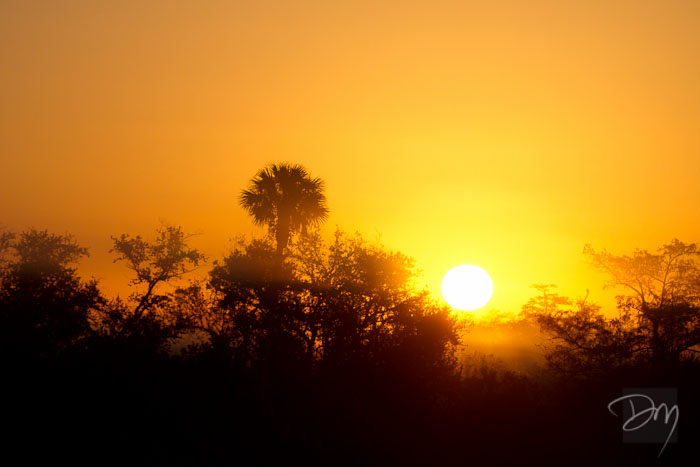
There were moments when we wondered if we'd get back to our put-in by dark, but made it just in time for sunset along Bottom's Road.  Here are a couple pelicans in the marsh and a panorama of the saltmarsh looking east towared Piney Island.


Tuesday, February 15, 2011

Memories at Work

Click on image for larger view, then use your Back Button to return to this page.  Enjoy!
Travelling as much as I did over the past month made for a pileup of work at my office.  For several days, I’ve been working on catching up with photo orders… six big canvases for a conference room at Georgetown University, two prints of the endangered red-cockaded woodpecker in its habitat in central Florida, a foggy morning on the Sopchoppy River for a man in NY who had good times on the river as a boy, scallop eyes for a college-level biology textbook, and one of my favorite artsy bird photos, a ruffled young white ibis on a shrimp boat in Miami.  Just sitting at my desk I get to take a meandering trip through recollections of good times in the making of these images.


Thursday, February 10, 2011

Corkscrew

Click on an image to see a larger version, then your Back button to return to this page.  Enjoy!

Corkscrew Swamp Sanctuary run by Audubon is a special place in SW Florida.  Crystal and I visited there a couple weeks ago and delighted in the many songbirds (what I used to refer to as LBJs... "little brown jobs"... for to my untrained naked eye, that's all they looked like.)  The Sanctuary boardwalks took us through cypress swamps, with alligators and wading birds, owls and hawks; through pine flatwoods, with the smaller birds. and a grassy marsh in between.  Pretty amazing place.  Meanwhile, here are a few of the LBJs we saw (not so brown afterall) -  the male and female Painted Buntings, and a Gray Catbird, plus a little blue heron from the swamp.


Monday, February 07, 2011

On the Road Again.

Click on photo for larger version, then your Back Button to return here.  Enjoy!

I'm trying to become more diligent about posting notes here, but get foiled whenever I'm travelling... which seems like a lot.  Often travel means camping, working early to late (shooting photos), or otherwise having no access to the internet.

Right now I'm in a motel in Lake Placid, FL on a shooting trip for FWC (Office of Recreation Services)... catching up on several days of emails, I got one from my boss saying that our office is being eliminated in our new governor's proposed budget... hmmm, I may be out of a job soon. (Not that I will stop my conservation photography).

Meanwhile, here's a photo from a trail I walked today at Tenorac Fish Management Area.  This female pileated woodpecker was so focused on her foraging that she ignored my approaching and photographing her.  After I had made my shots, I just watched her, not 20 feet away, for the longest time.


Saturday, February 05, 2011

Fisheating Creek Revisited

Click on an image to see a larger version, then click your Back button to return to this story.  Enjoy!

Fisheating Creek is one of those mysteriously magnetic places for me in Floirda.  I have paddled there since my childhood.  It is the only remaining creek that flows freely into Lake Okeechobee without crossing a weir or dam.  The creek banks are largely undeveloped so wild things can grow and live unfettered by human interference.  And the water levels in the creek are often too low for easy passage of even a canoe. I wrote another story about a Fisheating Creek adventure back in 2006 which you can read here if you'd like.

I had the good fortune of paddling a  section of the creek in November 2010 with my friend John Moran, and then again last month.  My wife Crystal had never been on Fisheating Creek, and after hearing my stories, really wanted to see it.... so we did.  The water level was at 1.52 ft at the gauge - just barely enough (1.5 is cutoff) to paddle from Burnt Bridge to the campground/outpost at Hwy 27. We still had to get out and drag our boats at least 20 times.  It's a spectacularly beautful place.  Go see it some time.  Meanwhile, here are a few recent photos from Fisheating Creek.


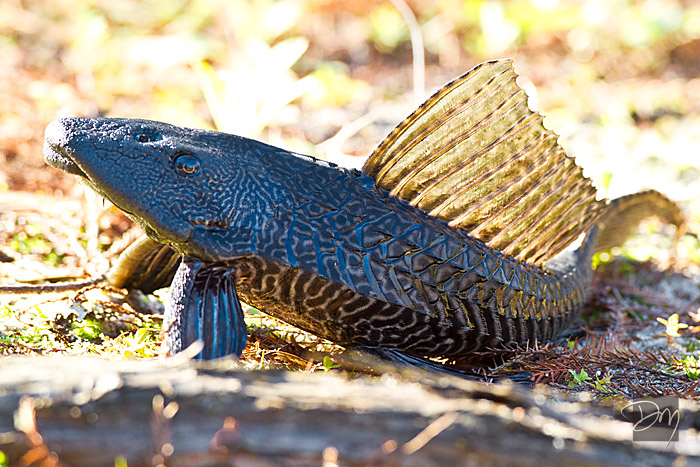
And here's the walking catfish whose story is told here.


Thursday, February 03, 2011

Walking Catfish Walking

Click on image to see larger version, then your BACK button to return to the blog.  Enjoy!

So we have probably all heard of invasive walking catfish... but who has ever seen one walking?  ... or even seen one in real life? ... or seen a photo of one walking?

Well, my wife Crystal spotted this fish on the bank of Fisheating Creek from her kayak.  She couldn't quite believe her eyes so caught up with me and we paddled back to investigate.  I have seen a lot of strange things, but here was a fish that walked out of the creek in broad daylight to sit in the sun and enjoy a bit of fresh air.

This was a remote part of the creek, not one visited by fishermen, and rarely by paddlers for at least the past 6 months. There it was standing on its pectoral fins with sailfin raised high. It stood still until we touched it, and then it took a deep breath, fanned out it's tail and looked at us.

Fish biologist, Chad Hanson helped me identify it as a vermiculated sailfin catfish, one of a number of exotic sucker catfish, and this one can stay out of water for hours.  Who'd a ever thunk?!

Tuesday, December 21, 2010

Moonlight Magic on the Turner River

 Click on a photo for larger view, then use your BACK button to return to this blog.  Enjoy!  And be sure to visit my photo website for more of my work.


On the night of the full moon, November 2010, John Moran and I set out to make this fantasy night time photograph on the Turner River in the Everglades.  John had been here years before and had dreamed about returning one night to make a dramatic photo like this.  I had been camping on this river with my dad when I was a boy and longed to return to explore.  Not the typical nature photograph either of us shoots, but fun and fantasy can share a place in our work and even portfolios. The two of us had been brainstorming about the mechanics of this photo for months.  We had borrowed the alligator skull from Gatorama in Palmdale, FL (a very cool old-fashioned gator farm and tourist attraction - website here).  Days earlier, we'd scouted the river to find this beautiful S-curve in a mangrove tunnel and tested the lighting rigs that we had devised.

The preparation had been an engineering challenge.  I had built a "5-flashlight sandwich" rigged to mount on the stern of my kayak (pictured lit in the portrait below).  TheLED flashlights fanned out to illuminate the mangrove canopy, while the plates shaded direct light from the camera and boat making the actual light source and kayak invisible in the photograph.  John had a powerful Q-beam lamp and a large clear drybag that we could submerge into the tannic water to paint light across the underwater bases of the mangrove prop roots and the river floor.  We spent a full afternoon cleaning, re-attaching teeth, and wiring the skull.  We needed to suspend the skull above the river bottom and wanted to be able to position it precisely, so we attached a plywood plate to the roof of the mouth to which we could mount a tripod.


The camera was mounted on a separate tripod and both tripods were heavily weighted and sunk deeply into the soft bottom to make them solid and still.  Once we'd composed the picture, we taped the lens focal and zoom rings to keep them from being able to move and attached a cable release.  Finally, time to begin!  We trembled with excitement - not to mention the cold water and November air, or the ever-present concern about flesh-and-blood alligators lurking around us in the dark.  John wore a knife strung around his neck.

We started making photographs of our scene just before dusk and continued until after 11 pm.  By then the full moon light was filtering down through the canopy providing the mottled light on the upper bromeliad and alligator skull. With the shutter open, I ever-so-slowly paddled the kayak through the tunnel dozens of times trying to get the right exposure and a smooth S-turn.  Once we tried walking the kayak through the tunnel -- both of us together -- it was just too creepy to do it alone.  We lit the skull in every imaginable way, lit all parts of the river bottom with the Q-beam.  Altogether we made 107 exposures, many of which were over a minute long.  Chilled, exhausted, but triumphant, we took the time to make this portrait of us, the skull, and our gear before leaving the scene.


The finished photo (top) is a composite of many layers of exposures of the exact same scene.  Nothing is photoshopped in or out (except to remove a few tiny wires and ties holding the skull.)  The building of the different light layers and processing of the photo took many hours -- even more than the shoot -- and ultimately the assistance of a superb photographer and friend, Jon Fletcher to fine tune the subtle shades and tones. Successful night shots walk a fine line between detail and darkness, even when not so complex as this. This fantasy photo is perhaps over-the-top for some... but I can tell you it was a grand adventure making it, and a learning experience, one I will always cherish.

Thursday, December 02, 2010

Fakahatchee Strand

Click on image for larger view.  Then your Back button to return to blog.  Enjoy!

I had the good fortune to spend two whole weeks adventuring with my friend, John Moran in mid-November -- destination: South Florida..  One of the highlights was the Fakahatchee Strand in the western Everglades.  Through a contact of John's, photographers Mac Stone, Paul Marcellini, John and I were able to stay in a rustic cabin on an in-holding in the Strand... so we could intimately experience the nightsounds - bellowing gators, hooting owls, and snoring roomates -- firsthand.


You might imagine a nocturnal encounter with a Florida Panther - this is, afterall, their home.  Or having a giant python fall onto you from a branch while slogging deep in the swamp.  Or maybe stepping on a big alligator while wading through a mangrove tunnel on the East River.  We did see a panther, but it was miles away at Gatorama near Palmdale.  Here he is as he might have been in the Strand, just as you imagined: in the fading lightbeam of your flashlight at 3 AM on your way to the outhouse.


And while John and I were wading around in the mangrove tunnels of the nearby Turner River late into the night -- two different nights no less -- we fortunately returned with all appendages intact and tripped over nary a gator.    We had with us a granddaddy gator skull that we used as a charm to ward off One-eyed Willie and the rest of his ilk that we had been warned about and also hoped to use it in a photo.  (More on this photo in a future post.)

 
There were plenty of pairs of glowing eyes watching us all along the way as we paddled back to the put-in at 11:30 PM.  Despite those shining red eyes, we couldn't help but stop to photograph the spectacular water lilies that had opened fully in the moonlight.  They were huge -- far more open and spectacular than by daylight.  We propped ol' Granddaddy up on the end of canoe (Beware, Willie!) and climbed back into the black water.  Here's why it was worth it.


As for the python, it never occurred to me that we might see one, but several family members commented on our foolhardiness given what we were doing. We never saw a python, but I did see a Florida Water Snake (pictured) on the East River (in the Strand) that somehow found itself in the prop roots of the red mangroves, more typically the habitat for Mangrove Salt Marsh Snakes.  No worries.  Neither poisonous.


Our forays into these west Everglades sloughs and creeks entailed a lot of slogging.  Even from our kayaks, we had to plough through dense grass, overhanging branches, and thick waterplants.  But mostly we paddled on beautiful winding trails along the East and Turner Rivers.  There were open lakes as well as completely canopied mangrove tunnels that could run for more than half a mile.  The graceful stilt roots reflected beautifully in the smooth dark water.


While incredibly beautiful to see, it was often difficult to create compositions from the tangle of busy trees and roots -- all at close range -- and come up with a photo that pleased the eye.  Here are some attempts from the mangroves creeks.


As we paddled back, hoping to find our way before darkness,  the sun fell into the horizon.  Mac and I pulled into a break in the sawgrass to see what we could in the western sky.  Mac scrambled up a tree at the edge of the grass for a better view.


The other slogging we did was on foot.  Paul had hiked into "The Cathedral" once before so he was annointed THE GUIDE.  (Plus he had an iPhone with Google Earth and his previous route marked on it -- so we figured we couldn't get too lost.)  Paul had warned us that the water could get chest-deep, so we struggled with what gear to bring and how to keep it dry.  Fortunately, the water was only sometimes waist-deep, and there were fallen trees and stumps that made small perches for setting packs and gear.  We had no camera-casualties during this trip. While we never made it to the heart of the Cathedral, we found some spectacular sloughs filled with Guzmania bromeliads and rare orchids. Once again, simplifying a composition in the thick of the swamp was challenging.  Paul had inspired us with samples of his dreamy steamy swampscapes (on his iPhone), so we knew there were photos to be found here.  Here are my attempts.


We started out before dawn to take advantage of the early light and avoid the added clutter of dappled shadows, but soon enough the sun was too high.  Not ready to leave the swamp, we resorted to macrophotography.  Mac found a baby treesnail that I spent far too long trying to photograph.


 On the last afternoon, with only John and I remaining, an old gator posed on a classic gator log near the end of the dock. What was meant to be naptime turned into a great shooting op.  The alligator mostly ignored us, so I had ample opportunity to experiment with all kinds of angles and lenses. The light was harsh and contrasty.  After awhile, we traded aiming a big reflector at the gator's face to get some front lighting - which helped in making the close up portrait.


We each turned into our bunkbeds that night, as exhausted as usual, satisfied with the day.  We were up at 4 AM (also as usual) to pack up, clean up the dear cabin, and leave the Fakahatchee.  This sunrise greeted us as we pulled out of the park entrance.  We headed east across the Glades.